
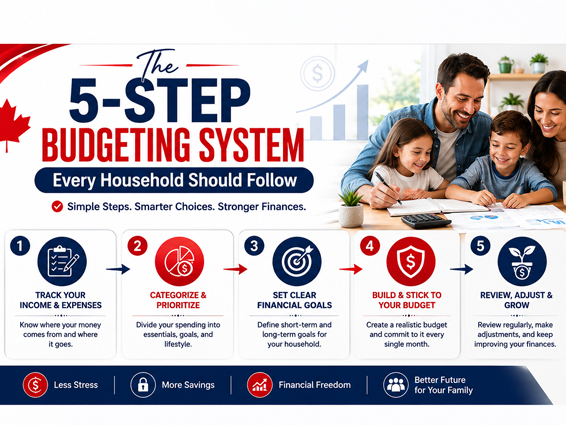
Why Budget?
Budgeting is one of the most powerful tools for building financial stability, yet many households avoid it because they believe it is complicated or restrictive. The truth is that a good budget does not limit your life – it gives your money direction. It helps you stay in control of your finances, reduce stress, and plan confidently for the future. Whether you are managing a single income, supporting a growing family, or adjusting to life in Canada, a simple budgeting system can transform the way you handle money.
“The truth is that a good budget does not limit your life – it gives your money direction.”
– Juliet Oregbe, Budgetting Advisor
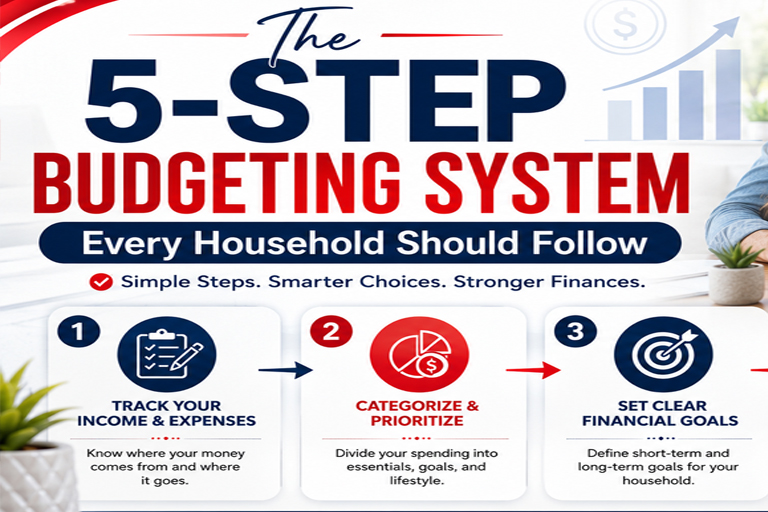
This practical 5-step budgeting system is designed to help any household create structure, build discipline, and achieve long-term financial wellness.


Step 1: Know Your Income and Track Your Expenses
The first step in budgeting is understanding how much money comes into your household and how much goes out each month. List all sources of income, including salaries, side income, and benefits. Then track your expenses – housing, groceries, transportation, utilities, childcare, subscriptions, and other regular costs.
Many families are surprised to discover how small daily expenses add up over time. Tracking your spending gives you clarity and helps you identify areas where adjustments can be made.
Step 2: Separate Needs From Wants
Not every expense is essential. A strong budget requires distinguishing between needs – such as housing, food, and utilities – and wants, such as entertainment, dining out, or non-essential shopping.
This step is not about eliminating enjoyment; it is about prioritizing what matters most. When households focus on needs first, they create space to save, reduce debt, and achieve financial goals.
“Setting aside a small amount each month to build an emergency fund provides protection and peace of mind.”
Step 3: Assign a Purpose to Every Dollar
A successful budget gives every dollar a job. Instead of spending money without a plan, decide in advance how your income will be used. This includes paying bills, saving for emergencies, reducing debt, and investing for the future.
When each dollar has a purpose, financial decisions become more intentional and less stressful. This approach also helps prevent overspending and encourages consistent saving habits.
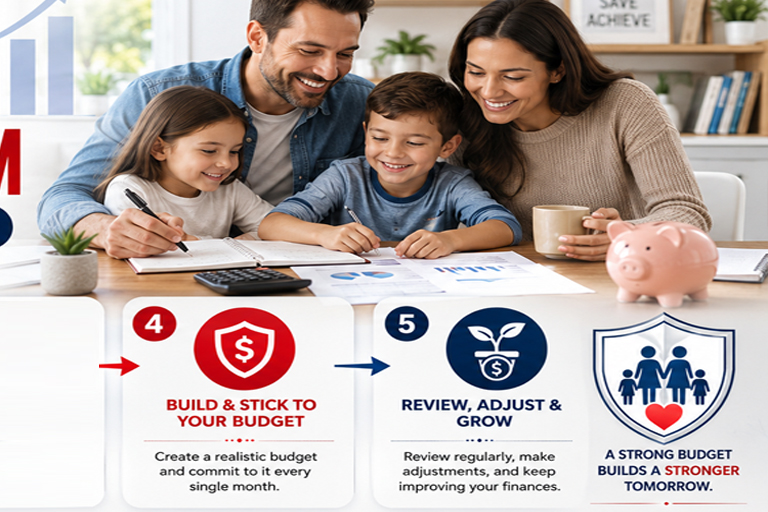
Step 4: Build an Emergency Fund
Unexpected expenses can disrupt even the most carefully planned budget. Car repairs, medical bills, or temporary job loss can create financial pressure if there is no safety net.
Setting aside a small amount each month to build an emergency fund provides protection and peace of mind. Over time, this fund becomes a financial buffer that helps households handle emergencies without relying on credit or loans.
Step 5: Review, Adjust, and Stay Consistent
A budget is not a one-time task – it is an ongoing process. Life changes, income changes, and expenses change. Reviewing your budget regularly allows you to adjust your plan and stay on track with your goals.
Consistency is the key to success. Even small improvements made over time can lead to significant financial progress and long-term stability.
A Simple System That Creates Financial Confidence
Budgeting is not about perfection – it is about progress. When households follow a clear system, they gain control over their finances, reduce stress, and build a stronger future for their families. A well-managed budget turns uncertainty into confidence and helps families move from survival to stability.
If you are ready to take control of your finances and create a budget that works for your household, Mudia Wellness Center can help. We provide practical budgeting guidance, financial education, and personalized support to help families build stability, reduce debt, and achieve lasting financial wellness.